


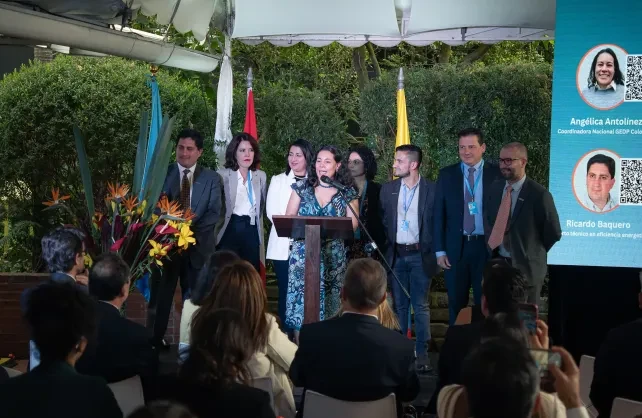
With the presence of the Ambassador of Switzerland to Colombia, Eric Mayoraz; the Director of the Energy and Climate Action Division at the United Nations Industrial Development Organization (UNIDO), Rana Ghoneim; the UNIDO Representative for Colombia and the Andean Region, Natascha Weisert; as well as representatives from Colombia’s Ministry of Mines and Energy and Ministry of Environment and Sustainable Development, together with companies and industry associations linked to the development of energy districts, the Colombia Energy Districts Programme (GEDP Colombia) officially launched its phase 3 and announced a call for proposals aimed at Colombian companies interested in developing energy districts that integrate renewable energy. The selected company will receive support from GEDP Colombia over the next 18 months, including technical assistance from national and international experts to support project development.
The event, held in Bogotá at the residence of the Ambassador of Switzerland to Colombia, brought together more than 70 participants from key sectors involved in the development of energy districts in the country. Attendees included representatives from the financial sector, energy companies, and industry associations such as Andesco, Acolgen, Acaire, ANDI, and Naturgás, as well as government institutions and international cooperation partners.
This gathering provided an ideal platform to launch the call for projects led by GEDP Colombia, which aims to support a company interested in developing an energy district in the coming years, using renewable energy as its primary source.
It is worth noting that GEDP Colombia is part of the country component of the Global Energy Districts Programme (GEDP), implemented by UNIDO with the support of the Swiss State Secretariat for Economic Affairs (SECO).
“At UNIDO, we actively promote programmes such as the Colombia Energy Districts Programme because they demonstrate that accelerating the energy transition through concrete, efficient, and innovative solutions is possible. Energy districts reduce emissions, optimize energy use and system efficiency, and transform how cities and industries produce and consume energy. Programmes like this show that energy efficiency and climate action contribute to inclusive and sustainable industrial development, while also strengthening competitiveness. We are committed to scaling up the implementation of models that deliver environmental, economic, and social impact across different regions of the world,” said Rana Ghoneim, Director of the Energy and Climate Action Division at UNIDO